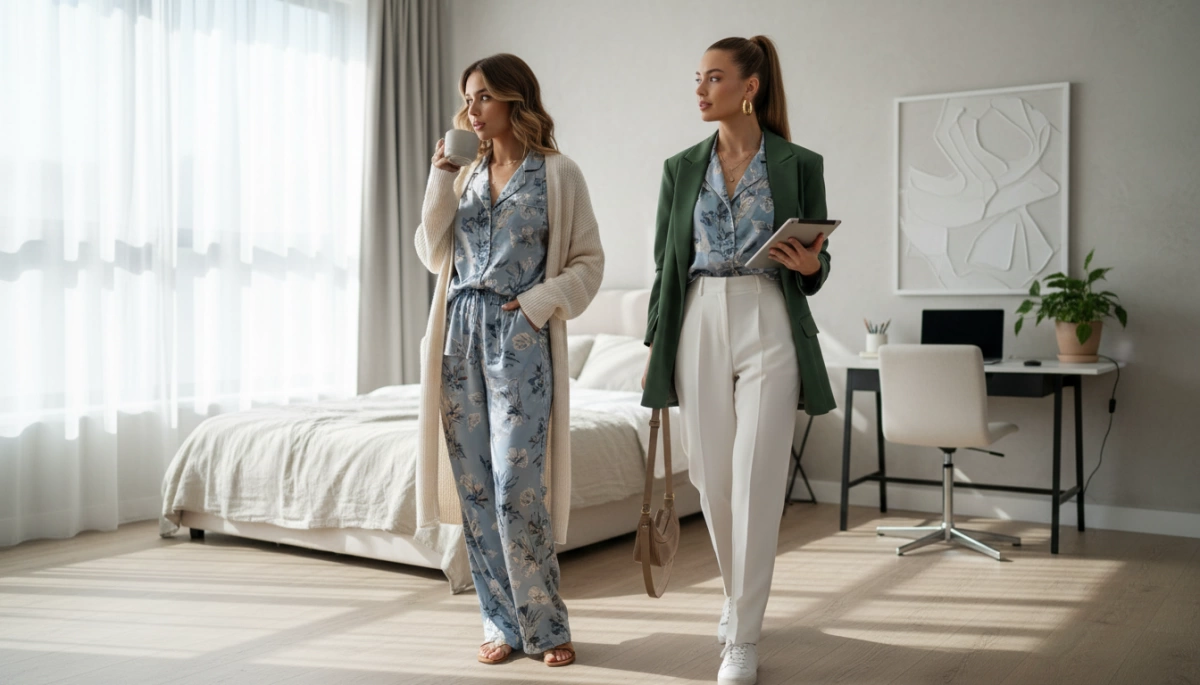
You already own the most versatile piece in your summer wardrobe. You just might not know it yet. A single slip dress can produce at least six distinct outfits without looking like you tried too hard. The trick is not buying more clothes. It is understanding the levers that shift an outfit from casual to evening-ready: footwear, outer layers, and accessories. Change two of those three, and you have a completely different look.
Most styling advice overcomplicates this. It tells you to buy a new dress for every occasion. That is expensive and unnecessary. A well-cut silk or satin slip dress in a neutral color—black, champagne, navy, or olive—works as a blank canvas. The fabric already does the heavy lifting. It drapes. It catches light. It moves. You just need to direct the context around it.
The Three Levers That Change Everything
Forget the idea that day-to-night dressing requires a full outfit change in a bathroom stall. It does not. You need to control three variables. Master these, and you control how formal or relaxed the dress reads in any setting.
Lever one: footwear. Shoes anchor the entire silhouette. Flat sandals ground the dress in daytime territory. A strappy heeled sandal pulls it toward evening instantly. Lever two: the topper. What you wear over the dress—or don’t—sets the formality level. An oversized cotton shirt tied at the waist reads weekend. A tailored blazer reads dinner plans. Lever three: the bag. A canvas tote says farmer’s market. A small structured bag or a chain-strap shoulder bag says cocktails. Swap two of these three, and the transformation is complete.
Color also matters here. A black slip dress gives you the widest range. It looks intentional with white sneakers and equally intentional with metallic heels. Champagne or rose gold slips skew slightly dressier by default but still work for daytime with the right grounding pieces.
Daytime: Grounding the Dress in Casual Territory

The slip dress wants to look dressed up. Your job during the day is to pull it back. You do this by introducing texture and utilitarian pieces that signal “I am not trying to be fancy.”
The White T-Shirt Layer
This is the most reliable daytime move. Take a fitted white cotton t-shirt—Uniqlo’s U Crew Neck ($15) works perfectly because the weight is substantial enough to hold its shape—and wear it under the slip dress. The t-shirt instantly strips away any lingerie-dressing connotations and turns the slip dress into a pinafore-style outfit. Add white low-top sneakers like Veja Campos or a flat leather sandal. A canvas tote finishes this. You look put-together without looking like you tried.
The Oversized Shirt as a Jacket
Button an oversized cotton-poplin shirt over the dress and leave it open. Tie it at the waist if the proportions feel too voluminous. The shirt acts like a lightweight jacket and adds structure to the slinky fabric underneath. This works especially well with midi-length slips. The vertical line of the open shirt elongates the silhouette. Roll the sleeves once or twice. Wear flat slides or thong sandals. The bag should be something slouchy—a leather hobo bag or a woven straw tote reads summer without trying too hard.
Denim Jacket and Flat Sandals
Yes, the denim jacket still works. A slightly oversized vintage-wash jacket from Levi’s or Everlane thrown over a slip dress creates texture contrast that photographs beautifully. Keep the jacket unbuttoned. Push the sleeves up to expose your forearms—this small adjustment changes the proportion and keeps the look from feeling blocky. Flat leather sandals with some substance, like Ancient Greek Sandals or a simple Birkenstock Arizona in a metallic finish, anchor the outfit firmly in daytime.
The Quick Switch: What Changes Between 5 PM and 7 PM
You have 90 seconds to transform. Here is exactly what matters and what doesn’t.
| Element | Day Version | Night Switch |
|---|---|---|
| Shoes | Flat sandals, sneakers, slides | Strappy heeled sandal, pointed-toe mule |
| Outer layer | Cotton shirt, denim jacket, linen blazer | Remove it, or swap for a black tailored blazer |
| Bag | Canvas tote, leather hobo, straw bag | Chain-strap bag, small clutch, structured mini bag |
| Jewelry | Minimal—small hoops, thin chain | Add one statement piece—bold earrings or a cuff |
| Hair | Down, messy bun, claw clip | Sleek low bun or add a deep side part |
| Makeup | Tinted moisturizer, brows, lip balm | Add a red lip or smudged eyeliner |
The shoes do most of the work. A pair of strappy sandals with a 2-3 inch heel—something like the By Far Tanya or a simple Steve Madden block heel—lifts the entire look immediately. The bag swap is the second most impactful change. Keep a small black chain-strap bag in your tote during the day. The COS Foldover Clutch or a vintage-style quilted bag works. No one notices you made the switch. Everyone notices you look different.
Nighttime: Letting the Dress Do the Work
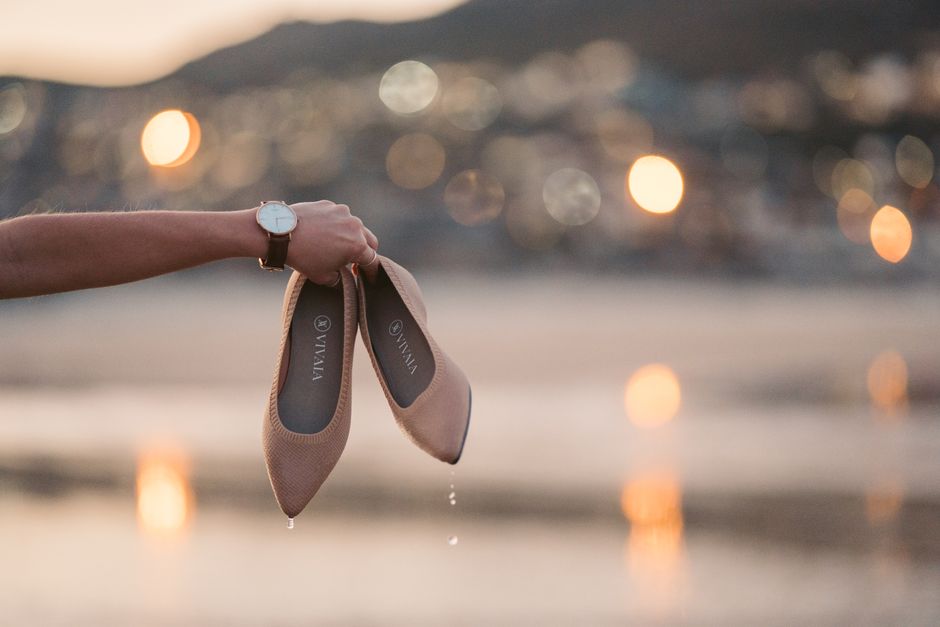
At night, you stop fighting the slip dress and let it be what it is. This is when the fabric’s natural drape and sheen become assets rather than things to tone down.
Bare, Minimal, Intentional
Remove the daytime topper. The slip dress stands alone. Add a heel. Add one piece of jewelry that reads as intentional—a sculptural earring from Mejuri, a single thick gold cuff, or a pendant necklace that sits at the collarbone. The goal is not to pile on accessories. The goal is to look like you made exactly three deliberate choices and then stopped. A sleek low bun or a deep side part with hair tucked behind one ear keeps the neckline visible. The dress’s neckline is a feature. Don’t hide it behind hair.
The Blazer for Evening
If the venue calls for more coverage or the evening cools down, a single-button black tailored blazer changes the slip dress into something sharper. The blazer should fit precisely at the shoulders. The sleeves should end at your wrist bone. This is not an oversized daytime blazer. This is a sharper, more structured piece. Pair with a pointed-toe heeled mule or a slim stiletto sandal. The silhouette becomes long and lean. A small clutch or a chain-strap bag in black or metallic finishes the look.
When the Dress Itself Is the Statement
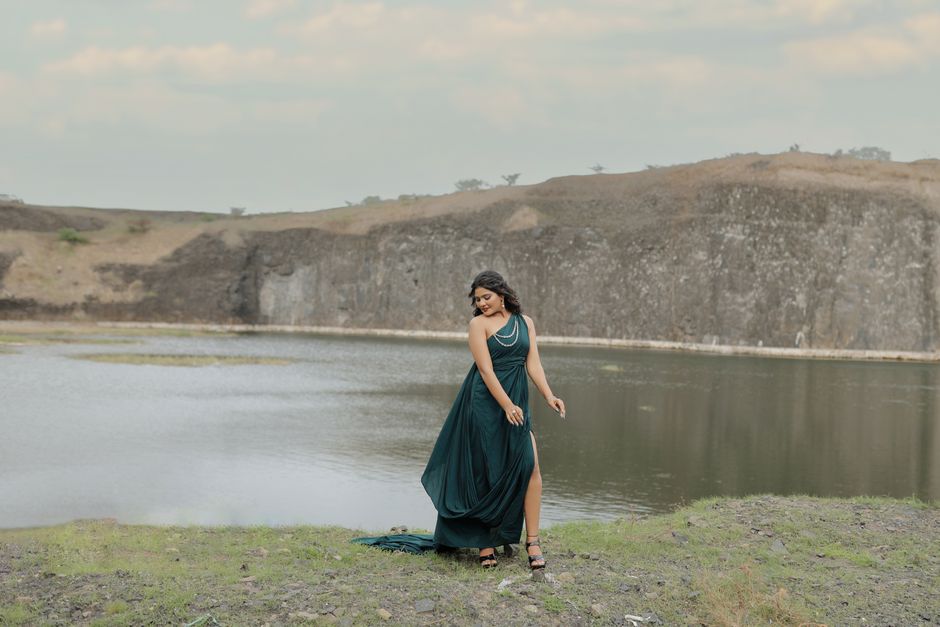
Some slip dresses do not need much help. A bias-cut silk slip in a jewel tone—emerald, sapphire, deep burgundy—or one with lace detailing at the hem already reads as evening. For these, subtract rather than add. Minimal jewelry. A single ring. A heel in a nude tone that elongates the leg without competing. The dress is the statement. Everything else supports it.
Mistakes That Undermine the Whole Look
Most slip dress styling mistakes fall into three categories. The first is wearing the wrong undergarments. Visible panty lines destroy the clean drape of a silk slip. Seamless underwear is not optional. Commando’s butter-soft seamless styles or Skims’ raw-edge thongs disappear under silk. The second mistake is ignoring proportion. If the dress is short, keep the heel lower and the top layer longer to balance the silhouette. If the dress is midi or maxi, a higher heel prevents the hem from dragging you down visually. The third mistake is over-accessorizing at night. The slip dress is already a strong piece. Adding a statement necklace, bold earrings, stacked bracelets, and a printed bag creates visual noise. Pick one focal point. Let the rest be quiet.
Another failure mode: wearing a slip dress that does not fit properly through the bust. If the side seams pull or the cowl neck gapes, the dress is either too small or cut for a different body shape. Bias-cut silk has very little forgiveness. Size up if you are between sizes. The extra fabric will drape better and actually look more expensive than a too-snug fit.
The Only Slip Dress Formula You Need This Summer

One dress. Two shoe options. Two toppers. Two bags. That is eight outfits minimum from five pieces total. The math works. A neutral midi slip dress—try the Realisation Par Naomi or a more accessible version from Abercrombie & Fitch’s satin range—paired with flat sandals and a cotton shirt for day becomes a completely different animal with heeled sandals and a chain-strap bag for night. You do not need a closet full of dresses. You need one good slip and the right supporting cast.
The slip dress has persisted through decades of trend cycles for a reason. It is not a trend piece. It is a silhouette that works because it follows the body’s natural lines and lets fabric do what fabric does best. This summer, the most effortless wardrobe is not the one with the most options. It is the one where every piece pulls double duty without complaint.