Most people think building an ethical wardrobe means spending $300 on a plain white t-shirt. That’s what kept me from even trying for years. The reality turned out to be completely different — and honestly, way more practical than I expected.
I stopped buying fast fashion cold turkey eighteen months ago. Not because I’m some kind of moral superhero, but because I got tired of clothes that fell apart after six washes. My breaking point was a Zara blazer where the lining shredded on the third wear. Third. Wear.
Here’s what actually happened when I rebuilt my closet with ethical alternatives — the real costs, the brands that survived, and the mistakes I’d undo if I could start over.
The Real Cost of Fast Fashion (It’s Not What You Think)
We talk about fast fashion like it’s cheap. It’s not. It’s just cheap up front.
I went through my old credit card statements and added up every H&M, Zara, ASOS, and Forever 21 purchase from 2026. The total was $1,847. For one year. That’s a lot of $34 dresses and $19 sweaters that added up fast. And by December, maybe 30% of those items still looked presentable.
The polyester blouses pilled. The knitwear stretched out at the elbows. The “vegan leather” (plastic) bags started peeling within months. I was essentially renting clothes for a few wears before they became unwearable.
Meanwhile, the Patagonia Better Sweater fleece I bought in 2019 for $139 still looks nearly new. That’s five years of regular wear. Do the math on cost-per-wear and the expensive fleece is actually cheaper than the $25 Old Navy version I’d replace every season.
Cost-per-wear is the metric that actually matters. A $150 pair of jeans worn 150 times costs $1 per wear. A $35 pair that loses its shape after 20 wears costs $1.75 per wear. The “cheap” option is more expensive.
The Hidden Environmental Math
The fashion industry produces roughly 10% of global carbon emissions. That’s more than international flights and maritime shipping combined. One polyester shirt releases the equivalent of 5.5 kg of CO2 and sheds microplastics every time you wash it.
I’m not saying individual choices fix systemic problems. They don’t. But understanding the numbers changed how I think about every purchase. Now I ask: will I wear this 50 times? If the answer isn’t an immediate yes, I walk away.
Where I Actually Shop Now: Brands That Earned Their Place
After eighteen months of trial and error, my closet has settled into a rotation of brands that consistently deliver. These aren’t aspirational recommendations — they’re the pieces I reach for every week.
| Brand | What I Buy | Price Range | Wear Count So Far |
|---|---|---|---|
| Patagonia | Better Sweater fleece, Iron Forge hemp work pants | $89–$149 | 200+ (fleece), 80+ (pants) |
| Eileen Fisher | Organic linen box tops, stretch crepe pants | $98–$178 | 60+ per piece |
| Pact | Organic cotton tees, underwear, socks | $18–$45 | 100+ (tees) |
| Everlane | Japanese denim, cashmere sweaters | $68–$150 | 90+ (denim) |
| ThredUp | Secondhand silk blouses, wool coats | $15–$80 | Varies, 40+ average |
Pact t-shirts surprised me most. At $25, they’re not much pricier than Uniqlo, but the cotton is GOTS-certified organic and the stitching holds through weekly washing. I’ve got three in rotation and they look better than the day I bought them.
Patagonia’s Iron Forge hemp pants at $99 are my single best purchase. They’re stiff at first — like, genuinely uncomfortable for the first week — but they break in like raw denim and now feel custom-molded to my body. I’ve worn them hiking, to client meetings, and on a 14-hour flight. They don’t wrinkle.
The Secondhand Goldmine Nobody Talks About
If I could restart this whole journey, I’d buy 80% of my ethical wardrobe secondhand from day one.
Here’s why: the most sustainable garment is the one that already exists. No new water usage, no new carbon emissions, no new microplastic shedding. And the price point makes ethical fashion accessible immediately — not after you’ve “saved up.”
I found a $450 Eileen Fisher silk dress on ThredUp for $42. Tags still attached. A $600 Theory wool coat on The RealReal for $89. These aren’t rare unicorn finds — they’re consistently available if you’re patient and use saved searches.
My secondhand strategy: I keep a running list of specific items I need (not want — need). When something on the list appears in my size on ThredUp or Poshmark, I buy it immediately. No browsing, no impulse scrolling. This prevents the “thrift shopping as entertainment” trap that fills your closet with stuff you don’t wear.
The RealReal is better for investment pieces — coats, bags, designer denim. ThredUp wins for everyday basics. Poshmark is best for specific items from specific brands when you know exactly what you’re hunting.
What I Wish I Knew Before Starting
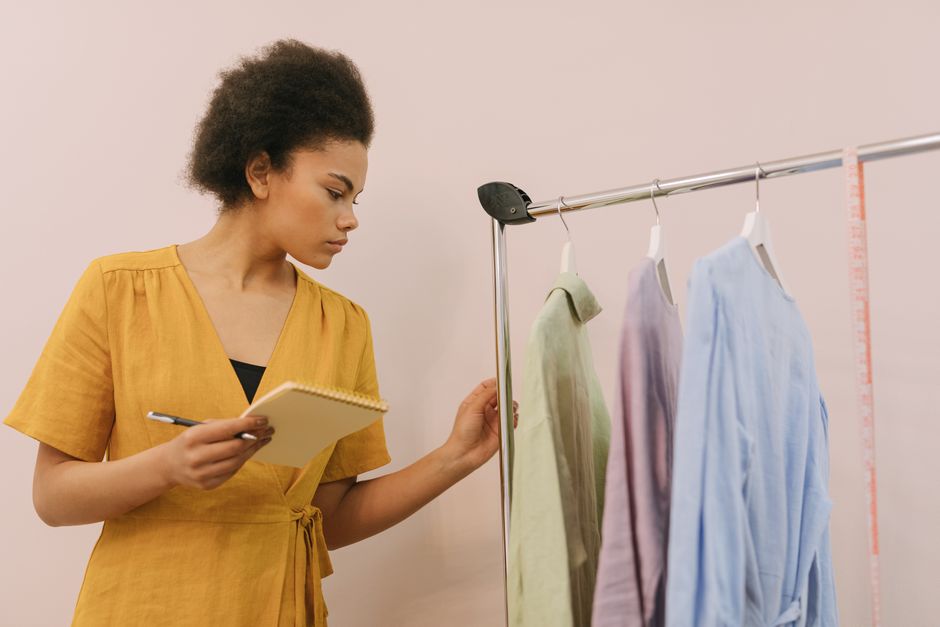
Three things would have saved me money and frustration.
First: don’t replace everything at once. I made this mistake. I donated six trash bags of fast fashion and immediately bought ethical replacements for the gaps. Bad move. I ended up with pieces I didn’t actually need because I was filling imaginary holes in my wardrobe. Replace items as they wear out, not in one dramatic purge.
Second: “ethical” is a spectrum, not a binary. Some brands are B Corp certified with fully transparent supply chains. Others just use organic cotton and call it a day. Decide what matters to you — fair labor, environmental impact, animal welfare, or all three — and research accordingly. The Good On You app rates brands on these metrics and helped me filter out greenwashing.
Third: natural fibers require different care. My old wardrobe was 80% polyester. Wash, dry, done. Wool, linen, and organic cotton need different handling. I shrunk a $120 merino sweater the first month because I tossed it in the dryer. Now I air-dry almost everything and use wool-specific detergent. The extra five minutes per load is worth not destroying expensive clothes.
The Items I Still Can’t Find Ethically
Let’s be honest about the gaps. Ethical fashion hasn’t solved everything.
Performance activewear is the hardest category. Most ethical brands focus on natural fibers, and natural fibers are terrible for high-sweat activities. Cotton gets heavy when wet. Linen chafes. I tried running in organic cotton leggings exactly once and regretted every step. For now, I buy Patagonia’s recycled polyester activewear and accept it’s not a perfect solution.
Plus-size options are still limited. Brands like Eileen Fisher and Universal Standard do better here, but the selection is a fraction of what’s available in straight sizes. This is a real problem the ethical fashion space needs to address.
Affordable formalwear basically doesn’t exist in the ethical space. Rent the Runway fills this gap for me — renting a gown I’ll wear once is more sustainable than buying one, ethical or not.
How My Spending Actually Changed
I tracked every clothing purchase for twelve months before and after the switch.
Before: 47 items, $1,847 total, average $39 per item. After: 12 items, $1,320 total, average $110 per item. I spent $500 less overall despite each piece costing nearly triple. The difference? I stopped buying things I didn’t need just because they were on sale.
The psychological shift was bigger than the financial one. Fast fashion trained me to buy constantly — new drops every week, limited-time sales, the fear of missing out on a trend. Breaking that cycle took months. Now I check my wardrobe before buying anything. If I can’t immediately name three outfits I’d wear the new piece with, I don’t buy it.
This approach isn’t deprivation. It’s the opposite. I genuinely like everything in my closet now. There’s no section of “clothes I feel guilty about” or “stuff I’ll wear when I lose five pounds.” Every piece earns its hanger space.
Where Ethical Fashion Goes From Here
The industry is shifting faster than I expected. Resale platforms like ThredUp and The RealReal are projected to grow 3x faster than traditional retail through 2026. Brands like Patagonia now offer repair services and buy-back programs. Eileen Fisher’s Renew program takes back worn garments and remakes them into new designs.
The biggest unlock will be textile recycling at scale. Right now, less than 1% of clothing is recycled into new clothing. Companies like Circ and Renewcell are developing chemical recycling that separates blended fibers — the holy grail for turning old polyester-cotton blends back into usable material. When that technology matures, the economics of ethical fashion change completely.
For now, the most radical thing you can do is simple: buy less, buy used, and wear what you own until it’s done. That’s not a compromise. It’s a better way to dress.