Most cheap clothes look cheap. The fabric shines wrong. The hardware feels hollow. The seams pucker after one wash.
But every so often, you find something that makes you double-check the price tag. Something with the weight, drape, and finish that reads as expensive—even when it costs less than takeout for two.
I spend an embarrassing amount of time hunting these pieces. Not the algorithm-pushed junk with 10,000 fake reviews. The real stuff. The pieces that make friends ask “where did you get that” and then look genuinely shocked at the answer.
Here are 8 of them. All under $50. All available on Amazon. All tested against the telltale signs of cheap clothing: thin fabric, sloppy stitching, plastic zippers, and that weird chemical smell.
The Hardware Test: What Separates Cheap from Chic
You can spot a cheap garment from across the room. It’s never the design. It’s the details.
Zippers. Plastic zippers catch, stick, and eventually break. Metal zippers—specifically YKK zippers—glide smoothly and last years. If a brand doesn’t specify the zipper type, assume plastic. The pieces on this list use metal zippers where zippers appear.
Buttons. Cheap buttons are thin, shiny plastic with visible mold lines. Quality buttons have some heft. They’re matte or lightly polished. They’re sewn on with thread shanks so they don’t sit flat against the fabric. Look for natural materials: shell, horn, corozo, even dense resin.
Stitching density. This is the one nobody talks about. High-end garments use 8-12 stitches per inch. Fast fashion uses 4-6. You can literally count the stitches. More stitches per inch = stronger seams and a cleaner finish. It also costs more in manufacturing time, which is why cheap brands skip it.
Fabric weight. Hold a garment up to light. If you can see your hand through it, it’s too thin. Quality fabric has density. It drapes, not floats. Cotton should feel substantial. Knits should bounce back when stretched. Synthetics shouldn’t make that swishing sound when you move.
Every piece below passes these checks. That’s the baseline. The rest is style.
The 8 Pieces

| Piece | Why It Works | Price Range | Best For |
|---|---|---|---|
| Oversized Blazer | Shoulder structure, full lining | $42-$48 | Work, dinners, thrown over jeans |
| Ribbed Knit Maxi Dress | Fabric weight, recovery | $35-$44 | Date nights, events, travel |
| Leather Tote Bag | PU quality, edge finishing | $38-$49 | Work, daily carry |
| Gold-Tone Hoop Earrings | Plating thickness, clasp mechanism | $18-$28 | Daily wear, gifting |
| Silk-Blend Scarf | Print quality, hand-rolled edges | $22-$34 | Hair accessory, bag accent, neck |
| High-Waist Trousers | Pleat depth, fabric drape | $39-$49 | Office, polished casual |
| Chunky Knit Sweater | Yarn composition, cable definition | $36-$46 | Weekend, layering |
| Pointed-Toe Mule | Toe shape, sole construction | $44-$50 | Office, events, elevated casual |
1. The Oversized Blazer That Holds Its Shape
Most cheap blazers collapse. The shoulders slump. The lapels go limp. The lining bunches at the elbows.
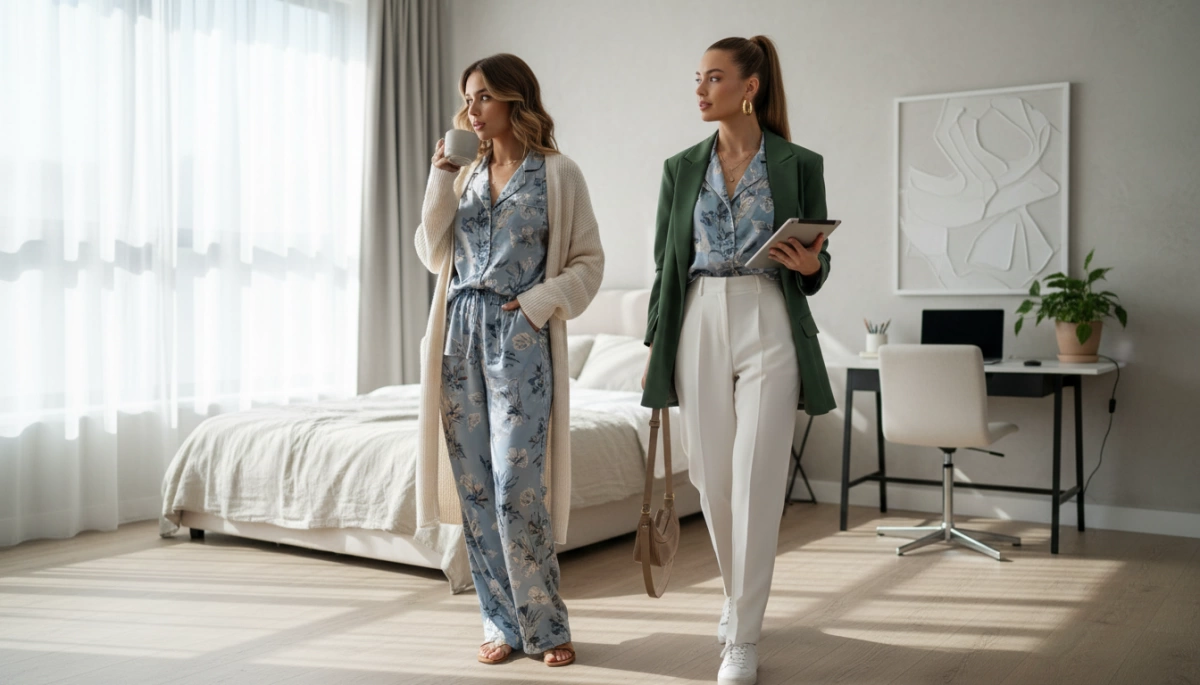
The Lark & Ro Women’s Classic Fit Blazer ($42-$48 depending on color) doesn’t do any of that. It has a defined shoulder pad—not the aggressive 80s kind, just enough to hold the line. The polyester-viscose blend has a matte finish that doesn’t scream synthetic. And it’s fully lined, which is rare at this price point.
What makes it read expensive: the sleeve buttons are functional, not just decorative stitching. The lapel roll is soft, not pressed flat. The length hits mid-hip, which balances proportions on most body types.
What to avoid: Blazers with no lining, shiny polyester finishes, and sleeves that are too short. A blazer sleeve should hit right at your wrist bone. If it doesn’t, you can’t fix it with tailoring—the sleeve is cut too short and there’s no fabric to let out.
Wear it with the high-waist trousers from this list, or throw it over a white tee and jeans. Either way, it looks like you spent more.
2. The Ribbed Knit Dress That Doesn’t Bag Out
Knit dresses have one fatal flaw: they stretch out. By hour three, the knees are baggy, the seat is sagging, and you look like you’ve been wearing it for a week.
The Daily Ritual Women’s Ribbed Midi Dress ($35-$44) uses a rayon-nylon-spandex blend with actual recovery. I wore one to a six-hour dinner event. Stood up, sat down, crossed legs, uncrossed legs. No bagging. No sagging. The ribbing held its shape.
The fabric weight is the key here. It’s substantial enough to skim the body without clinging to every line. The neckline is a clean crew—no raw edges, no curling. The side slit is modest but functional for walking.
When NOT to buy this: If you’re between sizes and prefer a looser fit, size up. The ribbing is forgiving but not magic. Also, skip this if you need something for extreme heat—the fabric weight that makes it hang beautifully also makes it too warm for 90-degree days.
3. The Leather Tote That Could Pass for $300
I’m going to be direct: most vegan leather bags under $50 look like plastic because they are plastic. Thin, shiny, stiff plastic that cracks at the handles within months.
The Montana West Tote Bag ($38-$49) uses a thicker PU leather with a pebbled grain that diffuses light instead of reflecting it. That’s the difference. Shiny = cheap. Matte or lightly textured = expensive. The edge finishing is clean—no raw cuts visible. The hardware is gold-tone metal, not painted plastic.
Inside, it’s lined with a sturdy cotton blend. The stitching at the handle attachment points is reinforced. This is where cheap bags fail first—the handles rip out because the stress points weren’t reinforced. This one holds up.
It fits a 15-inch laptop, a water bottle, and all the random stuff that accumulates in a daily bag. The magnetic closure is strong enough to keep things in but easy to open one-handed.
4. Gold Hoops That Won’t Turn Green
Cheap earrings turn your earlobes green. Sometimes within hours. The culprit is usually nickel in the base metal reacting with your skin.
The PAVOI 14K Gold Plated Chunky Hoops ($18-$28) use a brass base with 14K gold plating and a clear protective coating. PAVOI specifically markets these as hypoallergenic and nickel-free. I’ve worn them daily for months. No green. No itching. The plating hasn’t worn off at the edges.
The clasp mechanism is a hinged post that clicks securely into place. No fumbling with tiny butterfly backs. The thickness is 3mm—substantial enough to see from a distance but not heavy enough to pull on your earlobes.
Mistake to avoid: Don’t shower in them. Don’t swim in them. The protective coating extends the life of the plating, but it’s not permanent. Treat gold-plated jewelry gently and it’ll last years. Abuse it and you’ll get six months.
5. The Silk-Blend Scarf That Ties Any Outfit Together
A scarf is the cheapest way to make an outfit look intentional. But polyester scarves look like costume pieces. They’re too shiny, too stiff, and the prints are often blurry.
The FERAND Silk Feel Scarf ($22-$34) is a polyester-silk blend that mimics the drape and softness of pure silk at a fraction of the price. The key detail: hand-rolled edges. Machine-stitched hems on a scarf look flat and commercial. Hand-rolled edges have a slight dimensionality that signals quality.
The prints are sharp—no pixelation, no misalignment at the folds. The size is 27 x 27 inches, which works as a neck scarf, a hair tie, or wrapped around a bag handle.
I keep one tied on my tote bag permanently. It’s the detail that makes people think the whole outfit is more expensive than it is.
6. High-Waist Trousers with Actual Drape
Most affordable trousers are cut like tubes. Straight up and down, no shape, no movement. They fit like cardboard.
The The Drop Women’s Parisian High-Waist Trouser ($39-$49) has a wide leg with a deep pleat that creates actual drape. The fabric is a polyester-rayon blend with a crepe texture—matte, slightly grainy, nothing like the shiny polyester of cheap dress pants. The waistband is structured but not stiff. The zipper is a center-back invisible zip with a hook-and-eye closure.
Fit note: These run long. The brand lists a 32-inch inseam. If you’re under 5’6″, you’ll need hemming. But that’s actually a good sign—quality trousers are cut long with the expectation you’ll tailor them. Cheap trousers come in fixed lengths because the brand assumes you won’t bother.
Pair with the blazer from this list, or wear them with a fitted tee and sneakers. The contrast of polished trousers with casual pieces is exactly how people with expensive wardrobes actually dress.
7. The Chunky Knit That Looks Handmade
Machine knits can look flat and lifeless. The yarn is thin. The stitches are uniform to the point of looking printed on.
The Amazon Essentials Women’s Fisherman Cable Sweater ($36-$46) uses a cotton-acrylic blend with deep cable definition. The cables actually pop—they’re not just surface-level texture. The ribbing at the cuffs and hem is tight and springy. The neckline is a mock neck that stands up without flopping over.
The weight is substantial: about 1.5 pounds for a size medium. You feel it when you pick it up. That weight translates to warmth and structure. It hangs like a sweater should—relaxed but not sloppy.
Washing warning: Lay flat to dry. The one thing that will ruin this sweater is the dryer. It’ll shrink unevenly and the cables will lose definition. Treat it like wool even though it’s cotton.
8. Pointed-Toe Mules That Don’t Look Like Clown Shoes
Pointed-toe shoes at low price points have a common problem: the toe is too long. It extends past the foot in a way that looks cartoonish. The proportion is off.
The DREAM PAIRS Women’s Low Heel Mules ($44-$50) get the proportion right. The point is sharp but not exaggerated. The vamp cuts across the foot at the right spot—not too high (which shortens the leg line) and not too low (which shows toe cleavage in an unflattering way).
The heel is a manageable 2 inches. The sole is synthetic but has a leather-like finish on the visible edge. The insole has light padding—not memory foam, but enough for a few hours of standing.
The honest tradeoff: These are not walking shoes. They’re sitting shoes. Dinner shoes. Office shoes where you walk from the parking garage to your desk and that’s about it. The construction isn’t built for miles of city walking. If you need all-day comfort, look at block heels or flats instead.
How to Spot Quality in a Thumbnail
You’re scrolling Amazon. You can’t touch the fabric. You can’t try it on. Here’s what to look for in the product photos before you click buy.
Look at the model’s posture. If she’s twisting, sitting, leaning, or holding the garment in place, the piece doesn’t fit right on a standing body. Brands hide fit problems with poses.
Check for video reviews. Photos lie. Video reviews show how fabric moves, how it catches light, how it looks after a few hours of wear. If there are zero video reviews, wait until there are some.
Zoom in on the close-up shots. Look at the stitching. Look at the hardware. Look at the fabric texture. If the brand doesn’t provide close-ups, they’re hiding something.
Read the fabric composition, not just the fabric name. “Silk” in the title might mean 5% silk and 95% polyester. Scroll to the product details and check the percentages. A 100% polyester blazer can still look good if the finishing is right. But you should know what you’re buying.
Ignore the star rating. Read the 3-star reviews. Five-star reviews are often incentivized. One-star reviews are often about shipping damage, not product quality. Three-star reviews are where people actually describe the product honestly—what worked, what didn’t, and whether they’d buy it again.
When Cheap Is Actually Expensive
Buying cheap things that fall apart isn’t saving money. It’s paying a tax on being broke.
A $40 blazer that lasts two years costs $20 per year. A $200 blazer that lasts ten years also costs $20 per year. But the $40 blazer feels worse the whole time. The lining bunches. The buttons loosen. You’re constantly aware you’re wearing something cheap.
The pieces on this list aren’t cheap in that way. They’re inexpensive upfront but built well enough to last. They’re the gap between fast fashion and investment pieces—the sweet spot where you’re not paying for a brand name, just for decent materials and construction.
That’s the whole point. Not looking expensive. Looking like you know what you’re doing.