The average person spends 17 minutes getting dressed every morning. That adds up to over 100 hours a year — roughly four full days — standing in front of a wardrobe making the same uncertain choices. A personal style guide cuts that time down significantly. Not by restricting what you can wear, but by removing decisions you’d otherwise make from scratch every single day.
Here’s the difference between a style guide that works and one that collects dust: the useful one is built around your real wardrobe, not your aspirational Pinterest board. The tools, steps, and common pitfalls are below.
The Real Definition of a Style Guide
A personal style guide is a documented reference for how you dress. It captures your preferred colors, silhouettes, fabrics, and outfit formulas so you don’t have to reinvent your look every morning.
That’s it. Not a mood board. Not a wishlist. Those are inputs. A style guide is the output — a clear, usable reference you actually consult.
| What People Assume a Style Guide Is | What It Actually Is |
|---|---|
| A Pinterest collection of aspirational outfits | A documented system for your real, existing wardrobe |
| Something only influencers or stylists use | A practical tool for anyone who gets dressed daily |
| A rigid rulebook that kills creativity | A flexible framework that speeds up decision-making |
| Focused on current trends | Focused on what works for your body, lifestyle, and budget |
| Something you need to hire someone to build | Something you build yourself in two to three hours |
The brand version of a style guide — what designers and marketing teams use to define fonts, logo usage, and color systems — is a different thing entirely. When most people search “style guide meaning,” they want help building a consistent personal aesthetic. That’s the version this covers.
Why Most People Dress Inconsistently Without One

Without a style guide, most people fall into the same trap: buying individual pieces that look good in isolation but don’t connect to anything else they own. Wide-leg linen trousers here. A fitted blazer there. A graphic tee that felt inspired in the store but never gets worn. The wardrobe fills up. The outfit options shrink.
This is called the wardrobe paradox — more clothes, fewer functional outfits.
The cause is almost always the same: shopping without a reference system. Each purchase is judged by whether the single item looks appealing, not whether it integrates with what you already have. A style guide breaks this cycle by giving you a filter. Before anything goes into the cart, you already know whether it fits your palette, your silhouette preferences, and your actual lifestyle.
Brands like Everlane and Uniqlo have built entire business models around this problem. Their ranges are deliberately narrow and cohesive, making it easy to shop with intention across a limited color story. A style guide gives you that same cohesion across any brand you buy from.
There’s also the confidence factor. People who describe themselves as “not fashionable” usually aren’t lacking taste — they’re lacking a system. Once you know which colors and cuts consistently work for you, getting dressed feels less like a performance and more like a habit. The decisions are already made.
How to Build a Personal Style Guide in 5 Steps
No stylist required. No significant spending. About two to three hours and some honest self-assessment.
- Audit what you actually wear. Pull everything out of your wardrobe. Separate what you reach for regularly from what you don’t. Look at the “wear regularly” pile. What do those pieces have in common? Colors, fits, fabrics? That pile is your starting point — not your ideal self, not your Instagram saves, what you actually choose every week.
- Define your color palette. Identify three to five neutral base colors (navy, cream, grey, camel, charcoal) and one to two accent colors you’re genuinely drawn to. Write them down. Every purchase going forward should fit this palette. If it doesn’t, it doesn’t come home. This one rule eliminates about 80% of impulse-buying mistakes.
- Identify your silhouette formula. Most people have one or two silhouette combinations they feel best in. Maybe it’s fitted top with wide-leg trousers. Maybe it’s an oversized knit with slim jeans and a pointed-toe boot. Write down the two to three outfit structures you return to most often. These are your style anchors — the combinations that feel like you without effort.
- Document your lifestyle needs honestly. If you work in an office four days a week, roughly 60% of your wardrobe should be office-appropriate. If you work remotely and go out twice a month, flip that ratio. Your guide should reflect real life, not the life you imagine yourself having. Buying for fantasy is how wardrobes fill with unworn clothes.
- Build it somewhere accessible. A style guide only works if you open it. Use Canva (free) to build a one-page visual document with your palette swatches, silhouette notes, and outfit formulas. Or use the Stylebook app ($3.99, iOS), which lets you catalogue your actual wardrobe, create lookbooks, and track what you wear. Either format works. A simple document you’ll actually consult beats a perfect system you never look at.
Revisit the guide twice a year — once before summer shopping, once before autumn. Not to overhaul it. Just to check it still reflects how you actually dress. Styles evolve. So do you.
Color Palette: The One Element That Ties Everything Together
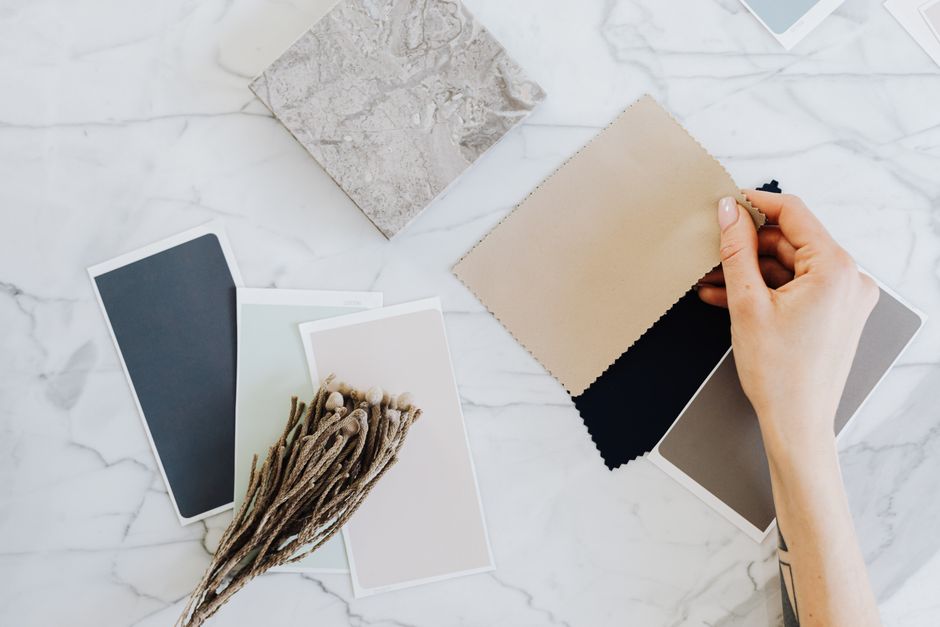
If there’s a single component of a style guide that does more work than anything else, it’s the color palette. Get this right and almost everything else becomes easier to figure out.
The reason is straightforward math. A wardrobe with 10 pieces in a cohesive palette generates roughly 25 to 30 outfit combinations. The same 10 pieces in 10 unrelated colors generates maybe 8 to 10 wearable combinations. Same number of clothes. Dramatically different result.
How to Find Your Palette
Start with skin undertone, not personal preference. Warm undertones (golden, peachy, yellowish) tend to look sharpest with earth tones — camel, olive, rust, cream, warm browns. Cool undertones (pink, bluish, neutral-cool) typically work better with navy, grey, burgundy, slate, and cool whites. This isn’t a strict rule. It’s a starting filter.
Then layer in what you’re actually drawn to. If a particular color consistently makes you feel good even though it’s outside your “correct” undertone family, keep it. The goal is a palette that makes you feel like yourself, not a technically perfect color wheel exercise.
Neutrals First, Accents Second
Build the base of your wardrobe in three to four neutrals that work interchangeably together. Uniqlo‘s core range — navy, off-white, charcoal, and camel — is a textbook example of this done commercially. Every piece connects to every other piece by design. Once your neutrals are set, add one or two accent colors through accessories, outerwear, or single statement pieces.
Accent colors don’t need to coordinate with each other. They just need to coordinate with your neutrals. A rust-orange bag works with navy, cream, and camel. It doesn’t need to match your burgundy boots.
The Test That Actually Works
Before adding any color to your style guide, ask one question: does this work with at least three things I already own? If you can’t name three pieces immediately, the color isn’t integrated into your wardrobe yet. That might mean your wardrobe needs to evolve toward it first. But don’t buy the new color until the foundation is there. Buying a color before its base colors exist is one of the fastest ways to create orphan items that never get worn.
Style Guide vs. Capsule Wardrobe: What’s the Actual Difference
These two terms get conflated constantly. They’re related but not the same thing, and knowing the difference helps you figure out which one you actually need right now.
| Feature | Style Guide | Capsule Wardrobe |
|---|---|---|
| What it is | A reference document — your personal aesthetic rules | A curated collection of specific physical pieces |
| Primary output | Guidelines for shopping and getting dressed | A fixed set of 30 to 40 versatile items |
| Flexibility | High — adapts to budget, trends, and seasons | Low — the rigid piece count is the whole point |
| Time to build | Two to three hours initially | Several weeks of editing, selling, and shopping |
| Upfront cost | Free to build | Can require significant investment in quality basics |
| Best for | Anyone who wants a smarter shopping filter | People ready for radical wardrobe simplification |
A style guide feeds into a capsule wardrobe — you can’t build a functional capsule without knowing your palette, your silhouettes, and your lifestyle needs first. Start with the guide. The capsule may or may not follow, depending on how minimal you want to go.
For most people, a well-built style guide alone is enough. The capsule wardrobe approach works best for those prepared to invest in high-quality versions of a very small number of pieces — think Everlane‘s uniform essentials or the minimal wardrobe philosophy that brands like The Row are built around. That’s a different level of commitment than building a reference document.
Three Mistakes That Make Style Guides Fail

Building for the Life You Wish You Had
The most common failure. Someone who works from home builds a guide full of tailored blazers and silk blouses because that’s what looks beautiful on Instagram. Then they never wear any of it. A style guide built on aspiration instead of reality creates a wardrobe you can’t use.
The fix: track what you actually wear for two weeks before building the guide. The Whering app (free, iOS and Android) lets you log daily outfits from your existing wardrobe. After two weeks, patterns emerge clearly — not based on what you imagined wearing, but on what you actually reached for.
Making the Palette Too Wide
Seven neutrals and four accent colors isn’t a palette. It’s just your whole wardrobe with extra steps. A palette only creates coordination when it’s restrictive enough to make every piece connect. Limit base neutrals to four maximum. Accent colors to two. If choosing feels impossible, the editing work hasn’t been done yet.
Treating It as a One-Time Exercise
A style guide written in 2026 and never updated won’t accurately reflect who you are in 2026. Jobs change. Lifestyles shift. Bodies evolve. What felt completely right three years ago can feel entirely wrong now, and that’s not a failure — that’s just life. The guide should be a living document, reviewed seasonally and adjusted when something stops feeling accurate. If opening it feels like looking at a stranger’s wardrobe, it needs a refresh, not a replacement.
The clearest sign a style guide is working: you stop buying things you never wear. That’s the metric that matters — not how polished the document looks, but how often you return home from shopping with pieces that actually integrate into what you already own.