You know that blazer you bought because it looked perfect on the hanger, then wore exactly once? The one where the sleeves pull weird when you reach for anything, or the fabric started pilling before the third coffee meeting?
I’ve bought that blazer. Multiple times. And I’ve watched friends do it too. The problem isn’t your budget—$300 is plenty of money for a genuinely good blazer. The problem is that most people shop for blazers like they shop for t-shirts: they look at color, maybe touch the fabric for half a second, try it on standing perfectly still, and call it a day.
A blazer has to move with you. It has to survive a full day without looking exhausted by 3pm. At this price point, you’re not getting hand-stitched Italian tailoring, but you absolutely can get something that looks and feels significantly more expensive than it is—if you know what to ignore and what actually matters.
The Fabric Test Nobody Tells You About
Here’s the single most useful thing I learned after wasting roughly $400 on bad blazers over the years: scrunch the fabric in your hand for five seconds, then let go. If the wrinkles stay, that’s exactly what you’ll look like after sitting through one meeting.
Blazers under $300 live and die by their fabric composition. You’ll see a lot of polyester blazers in this price range, and some of them are genuinely good. But most aren’t. The difference comes down to whether the polyester is there as a feature (adding structure, durability, wrinkle resistance) or as a cost-cutting shortcut (replacing wool entirely and making the jacket feel like plastic).
What to actually look for on the tag
Aim for at least 40% natural fiber content. Wool-polyester blends in the 50/50 range hit a sweet spot at this price: the wool gives breathability and drape, the polyester gives structure and wrinkle recovery. The J.Crew Going-Out Blazer ($168) uses a wool-poly blend that honestly looks like a $400 jacket after steaming. I’ve worn mine to events where people assumed it cost twice what I paid.
100% polyester blazers need to work harder to justify themselves. The exception is when the polyester is specifically a high-twist crepe or a substantial double-knit—you can feel the weight and texture difference immediately. Mango’s tailored wool-blend blazer ($149.99) consistently punches above its weight because they use a heavier fabric that drapes properly instead of floating around your body like a garbage bag.
Viscose and rayon blends can work beautifully for drape but will wrinkle if you look at them wrong. Only go this route if you’re willing to steam before every wear.
The Construction Details That Separate $80 Blazers From $280 Blazers

At $300 and under, you’re in the “half-canvassed at best” territory. That’s fine. What’s not fine is paying $250 for a fully fused blazer when you could get a half-canvassed one for the same money.
The canvas is the internal layer between the outer fabric and the lining. In cheap blazers, this layer is literally glued (fused) to the fabric. Over time, heat and humidity break down the glue, and you get bubbling across the chest that can’t be fixed. Half-canvassed blazers have a floating canvas layer through the chest and lapels, with fusing only in the lower portion. The lapels roll naturally instead of looking pressed flat like a pancake.
| Construction Type | What It Means | Typical Price Range | Worth It? |
|---|---|---|---|
| Fully fused | Entire front glued. Stiff, can bubble over time. | $50–$150 | Only if you need it for one event |
| Half-canvassed | Floating canvas in chest/lapel. Natural drape. | $150–$500+ | The sweet spot under $300 |
| Fully canvassed | Floating canvas throughout. Rare under $500. | $500+ | Not realistic at this budget |
How to check: pinch the fabric on the chest and sleeve. If you can feel three distinct layers (outer fabric, floating canvas, lining), it’s at least half-canvassed. If you can only feel two layers that feel like one solid piece, it’s fused. Do this test in-store and you’ll immediately eliminate half the options.
Everlane’s Oversized Blazer ($198) is half-canvassed and uses a substantial wool-poly blend. It’s the one I recommend to friends who want one blazer that works for both work and weekend. The shoulders have just enough structure without looking like 1980s power suits.
Shoulder Fit: The One Thing You Can’t Fix
Tailors can adjust sleeve length. They can take in the waist. They can even shorten a blazer slightly if you’re between sizes.
They cannot fix shoulders that don’t fit. The shoulder seam should sit exactly where your shoulder ends and your arm begins. If it droops past that point, the blazer will always look borrowed. If it pulls tight before that point, you’ll feel restricted every time you move.
This is where I see the most expensive mistake: buying a blazer that fits in the body but not the shoulders, then convincing yourself it’s “close enough.” It’s not. Size up to fit your shoulders and have the body taken in. A $40 tailoring job on a $200 blazer gives you a fit that looks custom. A $200 blazer that doesn’t fit in the shoulders looks like a $40 blazer no matter what.
The reach test
When trying on a blazer, reach both arms forward like you’re typing or driving. The shoulders shouldn’t pull, and the upper back shouldn’t feel like it’s about to split. Uniqlo’s +J relaxed blazer ($149.90) passes this test surprisingly well because they cut the armhole slightly higher than most at this price—more range of motion without the jacket riding up.
Lining: The Silent Dealbreaker

Bad lining ruins more blazers than bad outer fabric. Polyester lining that doesn’t breathe traps heat and makes you sweat in air-conditioned rooms. It also causes static cling that makes the blazer stick to whatever you’re wearing underneath.
Bemberg (cupro) lining is the gold standard—it breathes like cotton, doesn’t generate static, and feels cool against skin. You’ll find it in some blazers at the $250–$300 range. Massimo Dutti’s structured wool blazer ($249) uses a viscose-cotton blend lining that’s a solid runner-up: breathable enough for all-day wear without the static issues of cheap polyester.
If the lining is 100% polyester and the outer fabric is also 100% polyester, you’re buying a sweatbox. Avoid unless you genuinely run cold and never remove your blazer indoors.
When to Buy Vintage Instead of New
If you have patience and access to good thrift or consignment stores, $300 in the vintage market buys you what $800+ buys new. The construction quality of department store blazers from the 1980s and 1990s often exceeds what you find at $300 today.
What to look for: natural fiber content (100% wool, wool-cashmere blends), made in Italy/UK/USA/Canada labels, and brands like Brooks Brothers, Pendleton, and older Ralph Lauren lines. Budget $40–$80 for tailoring and you’ll still come in under $300 total.
The tradeoff is time. You might search for months before finding the right piece. If you need a blazer this week, go new. If you’re building a long-term wardrobe and enjoy the hunt, vintage is unbeatable value.
Three Blazers Worth Your Money Right Now
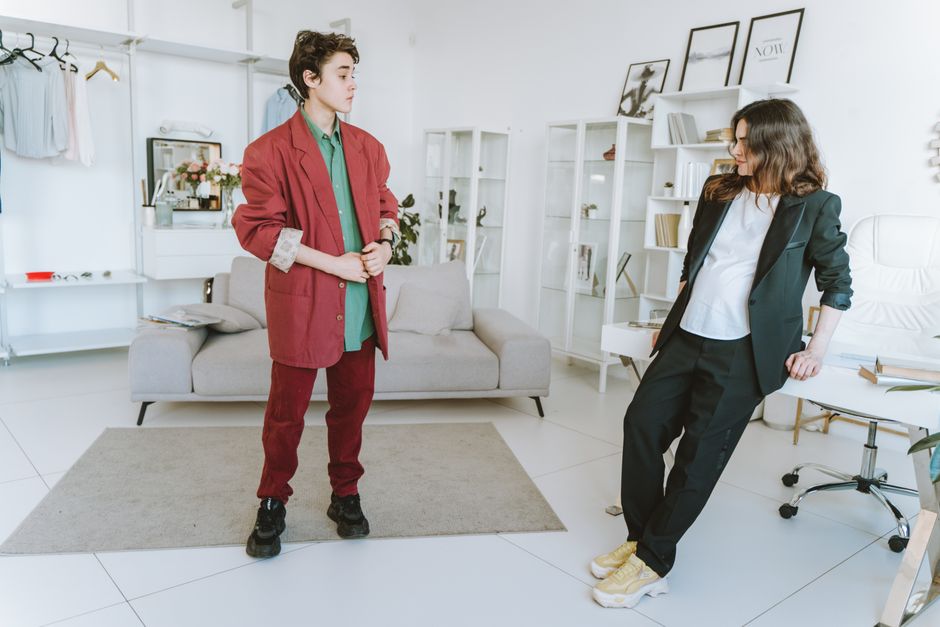
These aren’t the only good options, but they’re the ones I’d confidently recommend to a friend based on consistent quality across seasons:
- J.Crew Going-Out Blazer ($168): Best all-rounder. Half-canvassed, wool-poly blend that drapes well, available in regular and petite sizing. The navy version has been my most-worn blazer for two years and still looks new.
- COS relaxed wool-blend blazer ($225): Best for a modern, slightly oversized silhouette without looking sloppy. The fabric weight is substantial enough that it hangs properly. Runs large—size down unless you want the intentionally oversized look.
- Massimo Dutti structured wool blazer ($249): Best for a more tailored, European-cut look. Narrower through the body with higher armholes. The viscose-cotton lining makes it wearable across seasons.
What You’re Actually Paying For
The jump from $100 to $300 in blazers isn’t about brand names. It’s about three specific things that affect how the jacket looks after six months of wear: fiber content, canvas construction, and lining quality. A $100 blazer that’s 100% polyester with fused construction will look tired after a season. A $250 blazer with 50%+ wool, half-canvassed chest, and breathable lining will look better at month 12 than the cheap one looked at month 3.
Spend your money on fabric and construction. Ignore trendy details, novelty buttons, and anything with visible branding. A plain blazer that fits beautifully will get worn three times as often as a statement piece. At this budget, you’re buying one blazer that needs to work hard. Make it earn its place.