What would it take to get dressed for work in under 4 minutes, without standing in front of a full closet feeling like you own nothing?
The answer isn’t a bigger wardrobe. It’s a smaller one — specifically engineered.
A 20-item work wardrobe isn’t a style philosophy. It’s a decision architecture problem. When every item pairs with at least three others in the same category, the number of usable outfit combinations grows exponentially while the time spent choosing drops to near zero. Here’s the exact framework, how to audit what you already own, and where the system actually breaks down.
The Exact 20 Items and Why Each One Earns Its Spot
Every piece in a functional work wardrobe needs to fulfill at least two outfit roles — otherwise it’s decoration taking up visual space and decision bandwidth. Here’s the complete breakdown, organised by category and function:
| Category | Item | Count | Roles It Covers |
|---|---|---|---|
| Tops | Fitted shell tanks (black, white, navy) | 3 | Under blazer, standalone with trousers, layered under cardigan |
| Tops | Tailored button-down shirts (white, light blue) | 2 | Formal meetings, layered under blazer, tucked or untucked |
| Tops | Structured blouse (print or solid accent colour) | 1 | Client-facing days, standalone outfit anchor |
| Bottoms | Tailored trousers (black, charcoal) | 2 | Formal, everyday wear, client meetings |
| Bottoms | A-line or pencil skirt (neutral) | 1 | Pairs with all six tops in the list |
| Bottoms | Dark straight-leg trousers or smart jeans | 1 | Casual Fridays, hybrid or creative offices |
| Layers | Structured blazers (black, camel or cream) | 2 | Elevates any combination instantly, works as standalone layer |
| Layers | Fine-knit cardigan (neutral) | 1 | Air-conditioned offices, travel days, desk work |
| Dresses | Wrap dress (solid or subtle print) | 1 | Low-effort, high-output single outfit requiring no coordination |
| Dresses | Sheath dress (black or navy) | 1 | Presentations, formal meetings, interviews |
| Shoes | Block-heel pumps (nude or black) | 1 | Formal commitments, presentations, evening carry-over |
| Shoes | Leather loafers (black or tan) | 1 | Daily wear, comfortable all-day use without compromise |
| Shoes | Ankle boots (black) | 1 | Autumn and winter, works with trousers and skirts equally |
| Outerwear | Structured wool or wool-blend coat | 1 | Daily commute layer, works over everything else in the list |
| Bag | Structured work tote (leather or vegan leather) | 1 | Laptop, documents, daily carry without switching bags |
Six tops times four bottoms gives 24 base combinations before dresses enter the equation. Add two blazers that work across all of them and you’re past 50 usable outfit permutations from 20 items. Most people can’t extract that from a wardrobe three times this size.
Concrete starting points worth knowing: Banana Republic’s Logan Tailored Trouser (around $89 on promotion, 12+ colour options) fills the black-and-charcoal trouser slots without looking corporate-stiff. Everlane’s The Blazer ($198) is structured enough for formal client days without looking like a boardroom prop. For the wrap dress position, M.M. LaFleur’s The Miriam Wrap Dress ($175) runs from 7 a.m. through a dinner without any adjustment needed — that’s the kind of output-per-item ratio the 20-piece list depends on.
Why Colour Palette Determines Whether the System Works at All

Most capsule wardrobe attempts fail at the shopping stage — not because people buy the wrong items, but because they buy the right items in incompatible colours. A black blazer doesn’t automatically interchange with a warm brown trouser. A cool-toned navy shell looks flat next to a warm-toned grey skirt. These combinations sit unworn, which defeats the entire point of owning fewer things.
Build from a three-colour foundation before anything else
The most universally compatible neutral trio for office environments is black, white, and either camel or warm grey. Every core item in your 20 should be one of these three colours, or a muted tone that sits easily beside them — dusty blue, forest green, burgundy. Saturated colours like bright red, cobalt, or orange require active coordination. They don’t passively mix with other pieces; they anchor an outfit, and everything else plays a supporting role. Keep those in the blouse slot, never in trousers or blazers.
Before purchasing anything, hold two pieces next to each other in daylight. Undertones reveal themselves under natural light in a way store lighting consistently hides. A “black” piece with a blue undertone and a “black” piece with a brown undertone look wrong together on camera and under fluorescent office lighting — even when they appeared to match perfectly in the dressing room.
The fourth colour is where expression can live
Once the three-colour foundation is locked in, add one expressive colour. One. That structured blouse slot in the table is exactly where this belongs. A deep burgundy blouse or a forest-green shell works because it pairs directly with black trousers, a camel blazer, and white or nude shoes. The accent colour doesn’t need to coordinate with everything — only with your neutral base.
This is why Uniqlo’s Supima Cotton Crew Neck Shells ($25 each, available in 15+ colours) are worth testing in three colourways before committing to anything expensive. You can verify colour pairings at $25 per experiment rather than discovering a mismatch after buying a $120 COS blouse in a shade that fights everything you own.
Fabric weight matters as much as colour
A silk-weight blouse tucked into a heavy wool trouser creates visual imbalance regardless of how well the colours coordinate. Aim for similar fabric weights within a single outfit. Lightweight tops pair with lightweight bottoms — ponte, cotton-blend, stretch crepe. Heavier woven trousers pair with structured poplin or woven crepe tops. This principle alone eliminates a significant number of combinations that read as “off” without an obvious reason, and it’s almost never mentioned in standard wardrobe advice.
The Morning Change Is Smaller Than You Would Expect
Within two to three weeks of working from a 20-item wardrobe, morning decision time consistently drops below 4 minutes. That’s a direct result of a reduced decision set — not a personality shift, not a lifestyle change. When every item already works with every other item in the same category, the question changes from what goes with this? to what do I feel like wearing today? Smaller question. Faster answer. Every morning, automatically.
How to Audit Your Current Wardrobe in 45 Minutes
Before spending anything on new pieces, run this audit. Most people can build 60–70% of their 20-item wardrobe from what they already own — they just can’t see it through the noise.
- Pull everything work-related out of the wardrobe entirely. Pile it on the bed. Context shifts how you evaluate things — seeing items in isolation is different from seeing them hanging in sequence.
- Sort into three piles: Keep, Maybe, Out. Keep means worn in the last 3 months. Maybe means worn in the last 6 months. Out means unworn for 6+ months, or doesn’t currently fit correctly.
- Hold each Maybe item against your Keep pile. If it pairs with fewer than 3 Keep pieces, it moves to Out. A piece that only works in one specific outfit is a costume, not a wardrobe item.
- Count what remains in Keep. More than 20? Identify the 20 most versatile and set the rest aside. Fewer than 20? Write down the specific gaps — category, colour, function.
- Write the gap list before entering any store. “I need one camel blazer and two fitted black shells” is a shopping list. Walking in without it produces browsing, which produces impulse purchases that don’t fill actual wardrobe gaps — the exact problem the 20-item system is designed to prevent.
- Apply a 60-day wearing rule to everything kept. If a piece doesn’t get worn in the next 60 days, it leaves — even if it felt like a clear Keep during the audit.
The most consistent mistake in this process: keeping aspirational items. The blazer being saved for “when you really need it” but untouched for 14 months is not part of your wardrobe. It’s storage. And it costs decision energy every morning when you see it without choosing it.
When a 20-Item Wardrobe Breaks Down
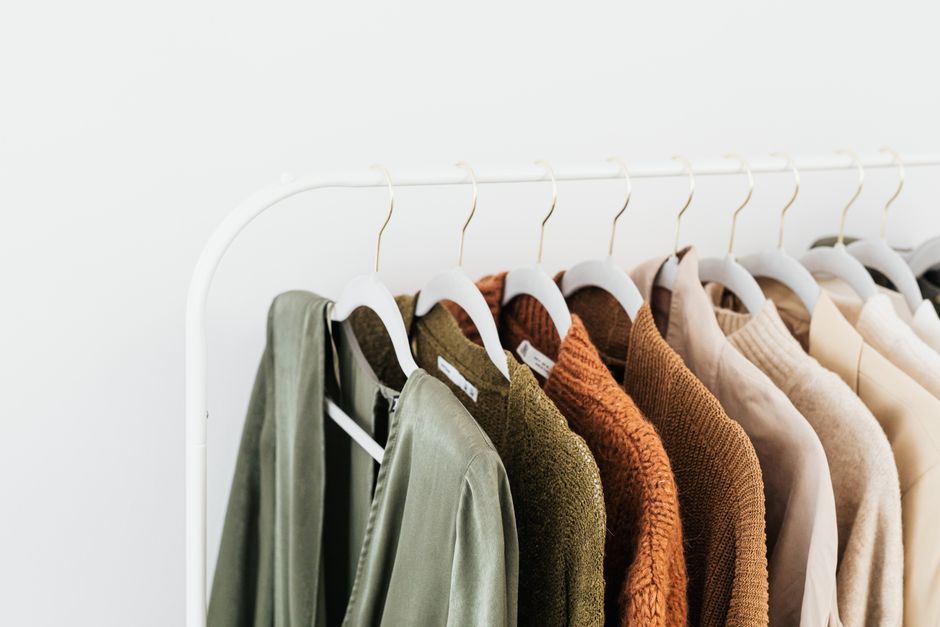
What if my office has a strict formal dress code?
A formal dress code narrows the variables in your favour, not against it. When the parameters are tight — suits, conservative silhouettes, limited colour range — the decision set shrinks naturally. Adjust the table: replace the smart jeans and casual items with a second sheath dress and a third trouser colour. Ann Taylor’s Curvy Straight Ankle Pant ($79) and Quince’s Washable Stretch Blazer ($90 in machine-washable ponte) both handle daily formal wear without dry-cleaning costs — which becomes a significant factor when rotating through the same pieces five days a week at that level of use.
What about seasonal changes?
The 20-item wardrobe is season-specific by design. Maintain two lists — warm months and cold months. The overlap is larger than expected: blazers, trousers, and most tops stay year-round. Swap in ankle boots for pumps in winter; replace a heavier blouse with a linen or silk shell in summer. You’re managing two seasonal wardrobes with significant shared inventory, not one static closet. Total item count across both seasons still stays well below what most people currently own across one.
What if I travel for work regularly?
Frequent work travel is where this system returns its biggest dividend. Every item already works with every other item, which means packing for a three-day trip requires no planning at all — pull five pieces from the list and every combination is covered. The wardrobe was optimised for travel without being specifically designed for it. That’s a side effect of the system working correctly.
That’s the thing about starting from one question — how many decisions do I actually want to make before 8 a.m.? — the answer quietly rebuilds every downstream logistics problem on its own.